
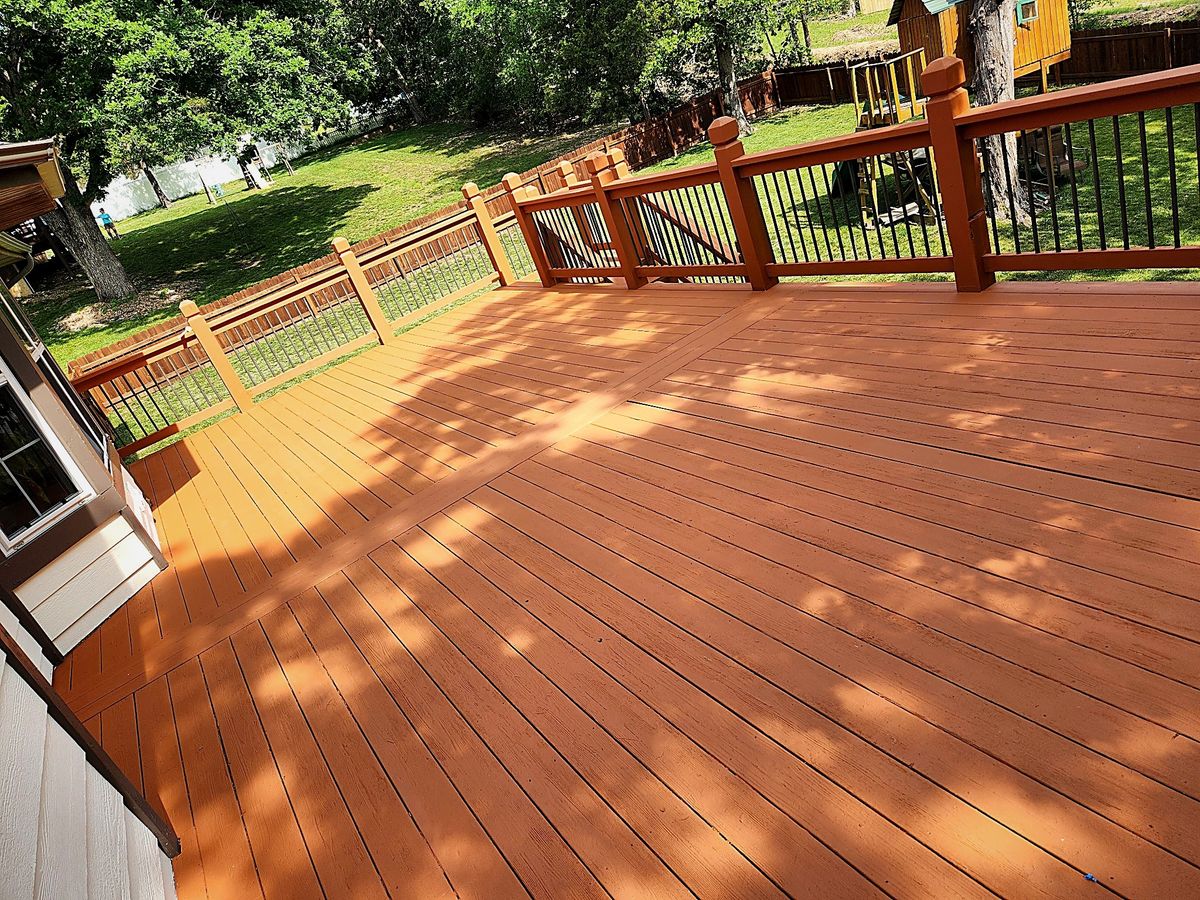
You've decided your deck needs staining. Maybe it's looking gray and worn. Maybe you just had repair work done and you're ready for a fresh finish. Either way, you know the job needs to happen — but when should you actually do it?
If you live in Springfield, Ozark, Nixa, or anywhere in southwest Missouri, timing your deck staining project correctly is one of the most important decisions you'll make. Stain applied in the wrong conditions won't bond properly, won't penetrate the wood evenly, and won't last nearly as long as it should.
We've stained hundreds of decks across the Springfield metro area, and we've seen firsthand what happens when timing is right — and when it's wrong. Here's everything you need to know about picking the best time to stain your deck in Missouri.
Why Timing Matters So Much for Deck Staining
Deck stain isn't paint. It's designed to penetrate into the wood fibers and protect from the inside out. For that to happen, three conditions need to line up:
- The wood needs to be dry enough to absorb the stain — but not so dry that it's baked shut
- The temperature needs to be in the right range — typically between 50°F and 90°F for most quality stains
- You need a dry window — no rain for at least 24-48 hours before and after application
Miss any of these, and you'll get poor adhesion, blotchy coverage, peeling, or premature wear. That's money wasted and a project you'll need to redo much sooner than necessary.
Missouri's Best Months for Deck Staining
Based on our experience working across Springfield, Republic, Willard, Battlefield, and the surrounding communities, here's how each season stacks up:
Spring
Doable, not ideal. Unpredictable weather — below freezing to mid-80s in the same week — spring storms, and moisture in the wood make it the trickiest season. For pros, spring is a solid window. We know how to read the temp and moisture conditions and work around the weather. Full fence and deck jobs happen in spring all the time — in the right hands. DIY: stick to small projects. Don't wing a full job in April.
Summer
Ideal for everyone — pros and DIY alike. Consistent temps, predictable weather. This is when the bulk of staining work should happen.
Early–Mid Fall
Ideal for everyone through mid-fall. Once late fall hits, the same unpredictability as spring returns — temp swings, early cold snaps, wet days. Early-to-mid fall is arguably the best window of the year.
Winter
Pros only, with commercial-grade product rated for application down to 25°F. It can be done and done well. But drying times slow significantly — no DIY should attempt it. Wrong conditions or wrong product and the whole job fails.
The Ideal Weather Conditions — A Checklist
Regardless of the month, here are the specific conditions we look for before starting any deck staining project:
- Temperature between 50°F and 85°F — measured at the deck surface, not just air temp
- No rain for 24-48 hours before application — the wood needs to be dry to the touch
- No rain expected for 24-48 hours after — stain needs time to cure and penetrate
- Humidity below 80% — high humidity slows drying and can cause a tacky finish
- No direct blazing sun during application — shaded or overcast conditions are actually ideal
- Deck surface is clean and prepped — old stain removed, wood brightened, repairs complete
"The difference between a stain job that lasts 2 years and one that lasts 5 years usually comes down to when and how it was applied — not which stain you picked."
What Happens When You Stain at the Wrong Time
We see the aftermath of bad timing all the time when homeowners in Rogersville, Strafford, and Fair Grove call us to fix peeling or blotchy deck stain. Here's what goes wrong:
Staining When It's Too Hot
When deck surface temperatures exceed 90°F — common on sunny Springfield afternoons in July — the stain dries on the surface before it can soak into the wood. You get a film that sits on top instead of penetrating. Within months, that film starts to peel, flake, and wear through in high-traffic areas. The deck looks worse than before you started.
Staining When It's Too Cold
Below 50°F, most stains can't cure properly. The solvents and oils don't evaporate at the right rate, leaving a sticky, uneven finish that never fully hardens. We've seen decks stained in November that were still tacky in January.
Staining on Wet Wood
This is the most common mistake we see. The wood looks dry on the surface, but it rained two days ago and the moisture content is still too high. The stain goes on fine, but it can't penetrate because the wood pores are full of water. Within a few weeks, you'll see light spots, uneven color, and the stain will start lifting in sheets.
Staining Before Rain
If it rains within 24 hours of application, the water washes out the stain before it has cured. You'll see streaks, light spots, and areas where the stain has been completely removed. In some cases, the entire deck needs to be stripped and re-stained.
How We Handle Timing at Stain & Seal Pros
When you hire us for a deck staining project in Springfield or the surrounding area, timing is part of our process from day one. Here's how we approach it:
- We schedule strategically. We don't book staining work into weeks where extended forecasts show rain. We build weather flexibility into every project timeline.
- We test moisture content. Before any stain goes down, we check the wood's moisture level. If it's above 15%, we wait — even if the surface looks dry.
- We prep before we stain. Our pre-stain process — cleaning, stripping old finish, brightening, and repairs — is done days before staining so the wood has maximum dry time.
- We watch the hourly forecast. On stain day, we're checking conditions in real time. If a surprise storm rolls in, we adjust rather than risk a bad result.
- We apply at the right time of day. In summer, that means early morning. In spring and fall, we have more flexibility. We follow the shade across the deck when possible.
This attention to detail is why our stain jobs last. It's not just about the product — it's about applying it at the exact right moment. You can learn more about our full approach on our process page.
What's the Single Best Window?
Summer and early-to-mid fall are both ideal. But if we had to pick one, early fall (September to mid-October) is the top pick for deck staining in the Springfield area. Here's why:
- Summer heat has dried the wood thoroughly — moisture content tends to be at its lowest after a Missouri summer
- Temperatures are cooling into the ideal range — 60s and 70s are perfect for stain absorption and curing
- Rain frequency drops — September and October are typically drier than summer in southwest Missouri
- Maximum winter protection — fresh stain going into winter means your deck has the best possible shield against freeze-thaw cycles, ice, and moisture
- Less competition for scheduling — most homeowners think "spring" for outdoor projects, so fall availability is often better
Summer is a close second and the easiest window for DIY. Spring is workable for pros and small projects — just don't try to squeeze a full fence or deck into an unpredictable April week and hope for the best.
Can You Stain a New Deck Right Away?
If you just had a new deck built, don't stain it immediately. New pressure-treated lumber is saturated with moisture from the treatment process. It needs time to dry out before stain will absorb properly.
Our recommendation: wait 4-8 weeks minimum for new pressure-treated wood, depending on the time of year. In a dry Springfield summer, 4 weeks might be enough. In spring, you may need closer to 8 weeks. We always test moisture content before staining new wood.
For naturally dried lumber like cedar or redwood, the wait time is shorter — often just 2-4 weeks. But again, moisture testing is the only reliable way to know.
How Often Should You Re-Stain?
In Missouri's climate, plan on re-staining your deck every 2-4 years, depending on:
- Sun exposure: South-facing decks in direct sun break down stain faster than shaded decks
- Traffic: A deck that gets heavy foot traffic wears through stain more quickly
- Stain quality: Professional-grade penetrating oil stains last longer than cheap box-store products
- Prep quality: A deck that was properly cleaned, stripped, and prepped before staining will hold its finish significantly longer
If you're looking for an easy way to stay on top of maintenance without worrying about timing, ask us about our annual maintenance program. We handle the scheduling, the weather watching, and the work — you just enjoy your deck.
Signs Your Deck Is Overdue for Staining
Not sure if it's time? Here are the telltale signs homeowners in Springfield, Billings, Highlandville, and the surrounding area should watch for:
- The water test fails: Sprinkle water on the deck. If it soaks in instead of beading up, your stain has worn through.
- Gray, faded color: UV has broken down the pigment and the wood fibers are exposed.
- Rough texture: The surface feels splintery or rough to bare feet — a sign of unprotected wood degrading.
- Mold or mildew: Green or black spots, especially in shaded areas, mean moisture is getting into unprotected wood.
- Cracking and checking: Small surface cracks are normal, but if they're deepening or multiplying, the wood needs protection. A full assessment might be in order if damage is significant.
Book Your Deck Staining at the Right Time
The best time to schedule your deck staining is actually 4-6 weeks before you want the work done. Our peak months fill up fast — especially April, May, September, and October. Homeowners in Springfield, Republic, Willard, Battlefield, and across the area who book early get priority scheduling and the best weather windows.
Whether your deck needs a full stain and seal, some board repairs first, or a complete prep-and-stain package, we'll help you time it right for a finish that lasts.
Don't guess on the timing. Let the pros handle it.